



第九课
学习openGauss普通表索引
👉openGauss SQL学习参考资料
https://opengauss.org/zh/docs/2.1.0/docs/Developerguide/SQL%E8%AF%AD%E6%B3%95.html
学习目标
学习openGauss普通表索引
索引是对数据库表中一列或多列的值进行排序的一种结构,使用索引可快速访问数据库表中的特定信息
课程学习
su - omm
gsql -r

1.创建索引
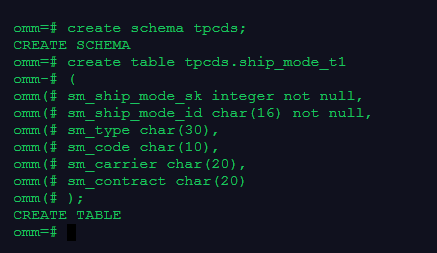
create schema tpcds;
CREATE TABLE tpcds.ship_mode_t1
(
SM_SHIP_MODE_SK INTEGER NOT NULL,
SM_SHIP_MODE_ID CHAR(16) NOT NULL,
SM_TYPE CHAR(30),
SM_CODE CHAR(10),
SM_CARRIER CHAR(20),
SM_CONTRACT CHAR(20)
);
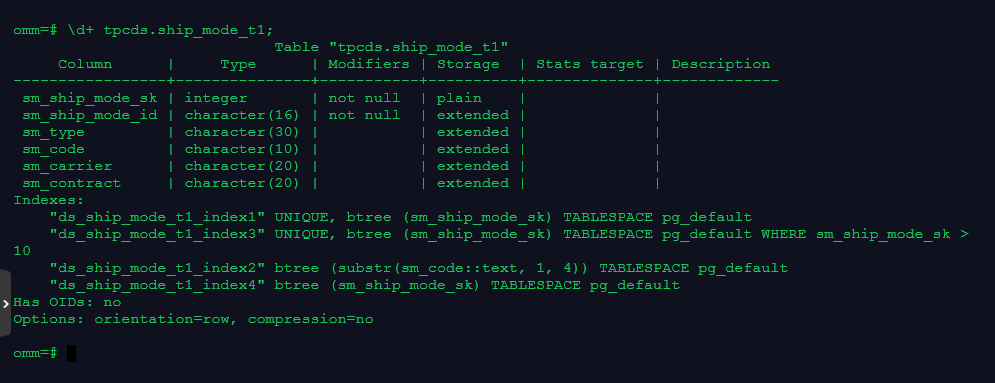
– SM_SHIP_MODE_SK字段上创建普通的唯一索引
CREATE UNIQUE INDEX ds_ship_mode_t1_index1 ON tpcds.ship_mode_t1(SM_SHIP_MODE_SK);

– SM_SHIP_MODE_SK字段上创建指定B-tree索引。
CREATE INDEX ds_ship_mode_t1_index4 ON tpcds.ship_mode_t1 USING btree(SM_SHIP_MODE_SK);

–SM_CODE字段上创建表达式索引
CREATE INDEX ds_ship_mode_t1_index2 ON tpcds.ship_mode_t1(SUBSTR(SM_CODE,1 ,4));

– SM_SHIP_MODE_SK字段上创建SM_SHIP_MODE_SK大于10的部分索引
CREATE UNIQUE INDEX ds_ship_mode_t1_index3 ON tpcds.ship_mode_t1(SM_SHIP_MODE_SK) WHERE SM_SHIP_MODE_SK>10;

–查看表信息
\d+ tpcds.ship_mode_t1
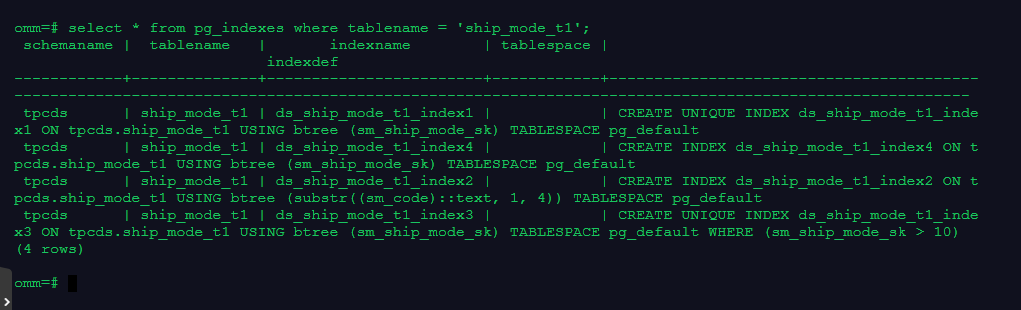
–查看系统视图pg_indexes
select * from pg_indexes where tablename = 'ship_mode_t1';
2.修改索引定义
–重命名索引
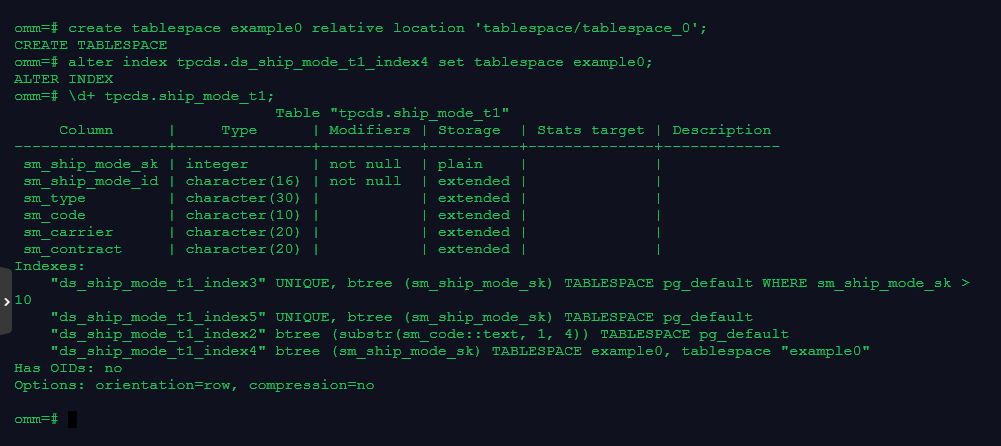
ALTER INDEX tpcds.ds_ship_mode_t1_index1 RENAME TO ds_ship_mode_t1_index5;

–设置索引不可用
ALTER INDEX tpcds.ds_ship_mode_t1_index2 UNUSABLE;

–修改索引表空间
CREATE TABLESPACE example0 RELATIVE LOCATION 'tablespace1/tablespace_0';
alter index tpcds.ds_ship_mode_t1_index4 set tablespace example0;
\d+ tpcds.ship_mode_t1;
3.重建索引
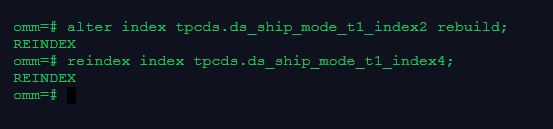
–重建一个单独索引
ALTER INDEX tpcds.ds_ship_mode_t1_index2 REBUILD;
REINDEX INDEX tpcds.ds_ship_mode_t1_index4;
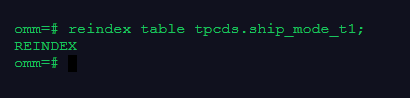
–重建所有索引
reindex table tpcds.ship_mode_t1;
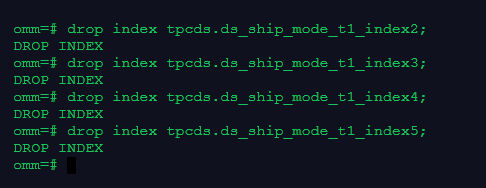
4.删除索引
DROP INDEX tpcds.ds_ship_mode_t1_index2;
DROP INDEX tpcds.ds_ship_mode_t1_index3;
DROP INDEX tpcds.ds_ship_mode_t1_index4;
DROP INDEX tpcds.ds_ship_mode_t1_index5;
课程作业
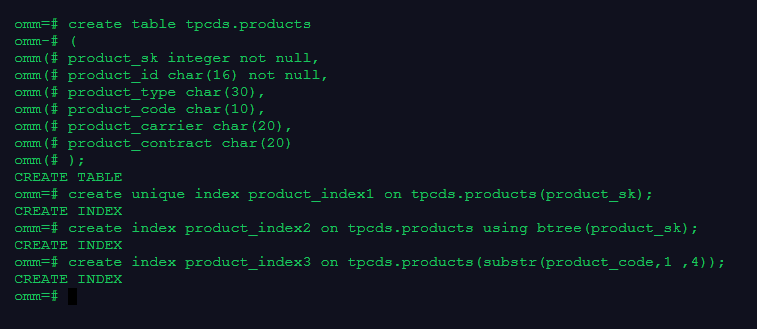
1.创建表products, 分别为表创建一个unique索引1,指定b-tree索引2和表达式索引3
create table tpcds.products ( product_sk integer not null, product_id char(16) not null, product_type char(30), product_code char(10), product_carrier char(20), product_contract char(20) );create unique index product_index1 on tpcds.products(product_sk); create index product_index2 on tpcds.products using btree(product_sk); create index product_index3 on tpcds.products(substr(product_code,1 ,4));
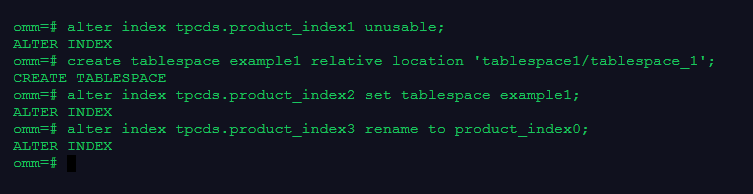
2.设置索引1不可用,修改索引2的表空间,重命名索引3
alter index tpcds.product_index1 unusable;
create tablespace example1 relative location 'tablespace1/tablespace_1';
alter index tpcds.product_index2 set tablespace example1;
alter index tpcds.product_index3 rename to product_index0;
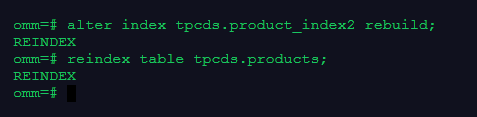
3.重建索引2和products的所有索引
alter index tpcds.product_index2 rebuild;
reindex table tpcds.products;
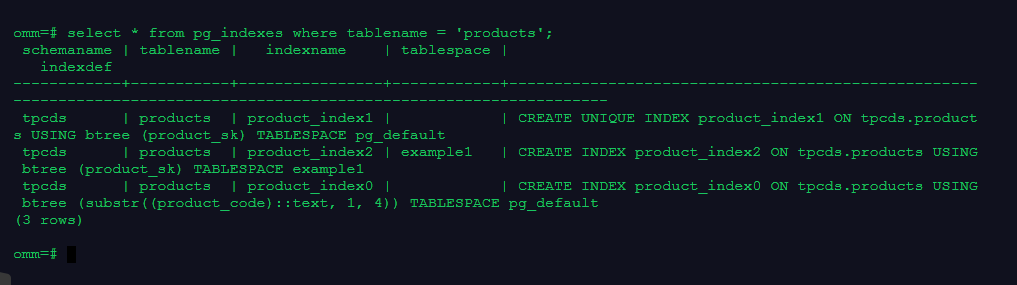
4.使用\d+和系统视图pg_indexes查看索引信息
\d+ tpcds.products;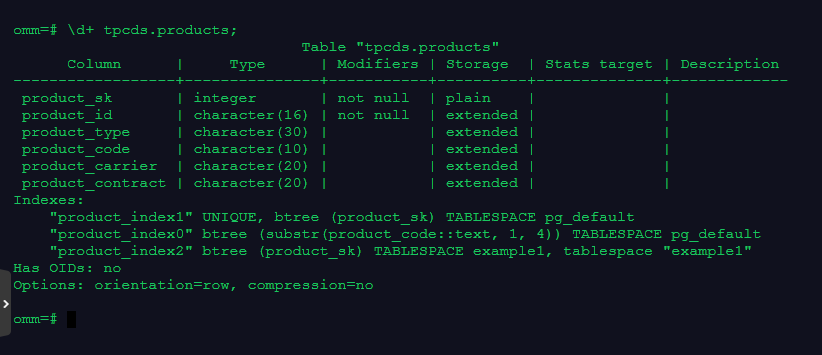
select * from pg_indexes where tablename = 'products';
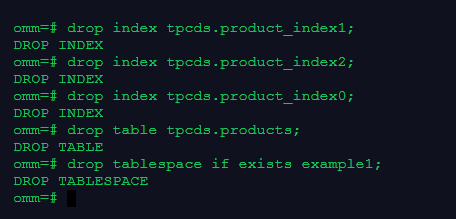
5.删除索引、表和表空间
drop index tpcds.product_index1;drop index tpcds.product_index2;drop index tpcds.product_index0;drop table tpcds.products;drop tablespace if exists example1;
写在最后
今天的作业打卡结束!🎉
最后,宣传一下自己创建的社区的打卡活动:零基础 21 天速通 openGuass 打卡活动报名贴!
🏅 是同一个活动哦,但是可以额外获得本社区的福利奖品!还不来参与?
「喜欢这篇文章,您的关注和赞赏是给作者最好的鼓励」
关注作者
【版权声明】本文为墨天轮用户原创内容,转载时必须标注文章的来源(墨天轮),文章链接,文章作者等基本信息,否则作者和墨天轮有权追究责任。如果您发现墨天轮中有涉嫌抄袭或者侵权的内容,欢迎发送邮件至:contact@modb.pro进行举报,并提供相关证据,一经查实,墨天轮将立刻删除相关内容。
