Hi~朋友,关注置顶防止错过消息
SpringApplication在构造完以后,我们会调用run方法启动应用程序,run方法的主要逻辑有:
SpringApplication Run方法分析
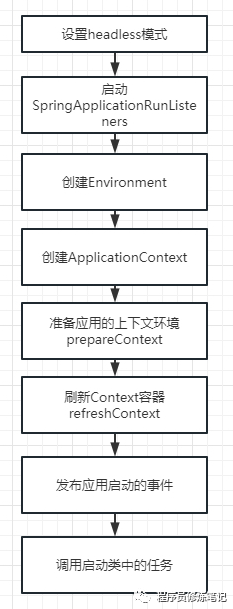
整个Run方法的逻辑主要如上图:
• 设置headless模式
• 启动SpringApplicationRunListeners
• 创建Environment
• 创建应用上下文(ApplicationContext)
• 准备应用上下文环境
• 刷新应用上下文
• 发布应用启动的事件
• 调用启动类中的任务
public ConfigurableApplicationContext run(String... args) {
    long startTime = System.nanoTime();
    DefaultBootstrapContext bootstrapContext = createBootstrapContext();
    ConfigurableApplicationContext context = null;
    //设置java.awt.headless系统属性为true,Headless模式是系统的一种配置模式。
    //在该模式下,系统缺少了显示设备、键盘或鼠标。但是服务器生成的数据需要提供给显示设备等使用。
    //因此使用headless模式,一般是在程序开始激活headless模式,告诉程序现在你要工作在Headless模式下,依靠系统的计算能力模拟出这些特性来
    configureHeadlessProperty();
    SpringApplicationRunListeners listeners = getRunListeners(args);
    listeners.starting(bootstrapContext, this.mainApplicationClass);
    try {
        ApplicationArguments applicationArguments = new DefaultApplicationArguments(args);
        // 设置Environment(此处就会读取application.yaml的配置文件)
        ConfigurableEnvironment environment = prepareEnvironment(listeners, bootstrapContext, applicationArguments);
        configureIgnoreBeanInfo(environment);
        Banner printedBanner = printBanner(environment);
        //创建应用上下文环境,也就是Spring的IOC容器
        context = createApplicationContext();
        context.setApplicationStartup(this.applicationStartup);
        //准备应用上下文环境,会去加载配置类基于注解的bean、xml配置文件中定义的bean
        prepareContext(bootstrapContext, context, environment, listeners, applicationArguments, printedBanner);
        //刷新上下文,对于servlet应用程序这个方法会去创建和启动web服务器
        refreshContext(context);
        afterRefresh(context, applicationArguments);
        Duration timeTakenToStartup = Duration.ofNanos(System.nanoTime() - startTime);
        if (this.logStartupInfo) {
            new StartupInfoLogger(this.mainApplicationClass).logStarted(getApplicationLog(), timeTakenToStartup);
        }
        //应用运行时监听器发布应用启动事件
        listeners.started(context, timeTakenToStartup);
        //调用启动类中的任务
        callRunners(context, applicationArguments);
    }
    catch (Throwable ex) {
        handleRunFailure(context, ex, listeners);
        throw new IllegalStateException(ex);
    }
    try {
        Duration timeTakenToReady = Duration.ofNanos(System.nanoTime() - startTime);
        listeners.ready(context, timeTakenToReady);
    }
    catch (Throwable ex) {
        handleRunFailure(context, ex, null);
        throw new IllegalStateException(ex);
    }
    return context;
}
启动SpringApplicationRunListeners
public ConfigurableApplicationContext run(String... args) {
    SpringApplicationRunListeners listeners = getRunListeners(args);
    listeners.starting(bootstrapContext, this.mainApplicationClass);
}

private SpringApplicationRunListeners getRunListeners(String[] args) {
    Class<?>[] types = new Class<?>[] { SpringApplication.class, String[].class };
    return new SpringApplicationRunListeners(logger,
        getSpringFactoriesInstances(SpringApplicationRunListener.class, types, this, args), this.applicationStartup);
}


void starting(ConfigurableBootstrapContext bootstrapContext, Class<?> mainApplicationClass) {
    doWithListeners("spring.boot.application.starting", (listener) -> listener.starting(bootstrapContext),
        (step) -> {
            if (mainApplicationClass != null) {
            step.tag("mainApplicationClass", mainApplicationClass.getName());
        }
    });
}

@Override
public void starting(ConfigurableBootstrapContext bootstrapContext) {
    this.initialMulticaster.multicastEvent(new ApplicationStartingEvent(bootstrapContext, this.application, this.args));
}
• 通过getRunListeners方法找到所有的SpringApplicationRunListener(通过META-INF/spring.factories找到具体的实现类,然后利用反射生成具体的对象)
• 调用SpringApplicationRunListener的starting方法(在这里spring-boot-2.7.7中的是EventPublishingRunListener)
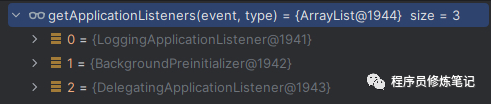
• EventPublishingRunListener中的starting方法就是广播一个ApplicationStartingEvent事件,此时对ApplicationStartingEvent感兴趣的Listeners就会对其进行处理(调用其onApplicationEvent方法),下图是对该事件感兴趣的Listeners
创建Environment
public ConfigurableApplicationContext run(String... args) {
    ConfigurableEnvironment environment = prepareEnvironment(listeners, bootstrapContext, applicationArguments);
    configureIgnoreBeanInfo(environment);
}

private ConfigurableEnvironment prepareEnvironment(SpringApplicationRunListeners listeners,
    DefaultBootstrapContext bootstrapContext, ApplicationArguments applicationArguments) {
    // Create and configure the environment
    ConfigurableEnvironment environment = getOrCreateEnvironment();
    configureEnvironment(environment, applicationArguments.getSourceArgs());
    ConfigurationPropertySources.attach(environment);
    listeners.environmentPrepared(bootstrapContext, environment);
    DefaultPropertiesPropertySource.moveToEnd(environment);
    Assert.state(!environment.containsProperty("spring.main.environment-prefix"),
        "Environment prefix cannot be set via properties.");
    bindToSpringApplication(environment);
    if (!this.isCustomEnvironment) {
        EnvironmentConverter environmentConverter = new EnvironmentConverter(getClassLoader());
        environment = environmentConverter.convertEnvironmentIfNecessary(environment, deduceEnvironmentClass());
    }
    ConfigurationPropertySources.attach(environment);
    return environment;
}

protected void configureEnvironment(ConfigurableEnvironment environment, String[] args) {
    if (this.addConversionService) {
        environment.setConversionService(new ApplicationConversionService());
    }
    configurePropertySources(environment, args);
    configureProfiles(environment, args);
}
• 首先会通过getOrCreateEnvironment方法初始化Environment,这里Environment的具体类型是ApplicationServletEnvironment
• 接下来会通过configureEnvironment来初始化参数,该方法首先会在Environment中设置一个ConversionService(ApplicationConversionService),然后将命令行中的参数添加到Environment的MutablePropertySources中
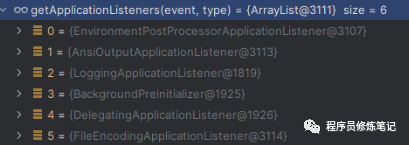
• 接下来通过listeners.environmentPrepared发布ApplicationEnvironmentPreparedEvent事件,对此事件感兴趣的Listener将会对此事件进行处理
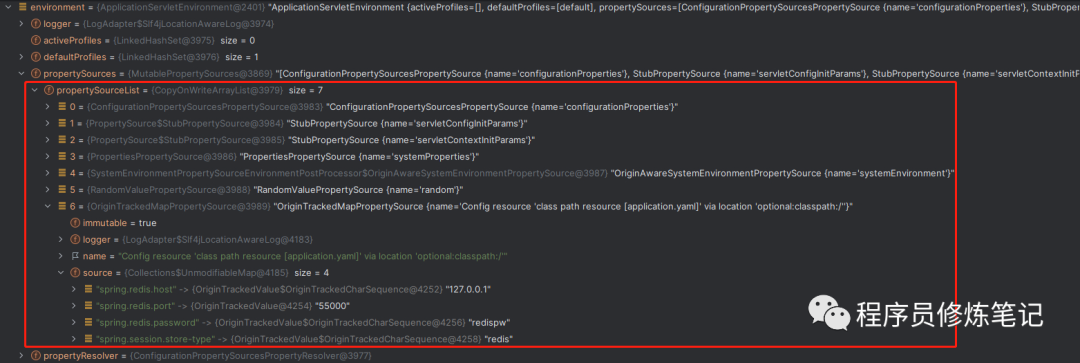
• 当prepareEnvironment方法执行完成以后,Environment中的Property也处理完成,如下图:
创建ApplicationContext
protected ConfigurableApplicationContext createApplicationContext() {
    return this.applicationContextFactory.create(this.webApplicationType);
}
这里会默认创建一个AnnotationConfigServletWebServerApplicationContext类型的ApplicationContext。
预处理应用上下文prepareContext
private void prepareContext(DefaultBootstrapContext bootstrapContext, ConfigurableApplicationContext context,
        ConfigurableEnvironment environment, SpringApplicationRunListeners listeners,
        ApplicationArguments applicationArguments, Banner printedBanner) {
    context.setEnvironment(environment);
    postProcessApplicationContext(context);
    applyInitializers(context);
    listeners.contextPrepared(context);
    bootstrapContext.close(context);
    if (this.logStartupInfo) {
        logStartupInfo(context.getParent() == null);
        logStartupProfileInfo(context);
    }
    // Add boot specific singleton beans
    ConfigurableListableBeanFactory beanFactory = context.getBeanFactory();
    beanFactory.registerSingleton("springApplicationArguments", applicationArguments);
    if (printedBanner != null) {
        beanFactory.registerSingleton("springBootBanner", printedBanner);
    }
    if (beanFactory instanceof AbstractAutowireCapableBeanFactory) {
        ((AbstractAutowireCapableBeanFactory) beanFactory).setAllowCircularReferences(this.allowCircularReferences);
        if (beanFactory instanceof DefaultListableBeanFactory) {
            ((DefaultListableBeanFactory) beanFactory)
                    .setAllowBeanDefinitionOverriding(this.allowBeanDefinitionOverriding);
        }
    }
    if (this.lazyInitialization) {
        context.addBeanFactoryPostProcessor(new LazyInitializationBeanFactoryPostProcessor());
    }
    context.addBeanFactoryPostProcessor(new PropertySourceOrderingBeanFactoryPostProcessor(context));
    // Load the sources
    Set<Object> sources = getAllSources();
    Assert.notEmpty(sources, "Sources must not be empty");
    load(context, sources.toArray(new Object[0]));
    listeners.contextLoaded(context);
}
• 首先通过context.setEnvironment方法将前面组装好的Environment放入上下文中
• postProcessApplicationContext后置处理Context,主要是将Environment中的ConversionService对象放入到Context中的BeanFactory(DefaultListableBeanFactory)中
• 紧接着在applyInitializers中会调用所有的ApplicationContextInitializer的initialize方法
• listeners.contextPrepared方法用来发布ApplicationContextInitializedEvent事件,对此事件感兴趣的Listeners将会对事件进行处理
• logStartupInfo和logStartupProfileInfo会打印启动详情和当前环境(profile)
• context.getBeanFactory会获取到BeanFactory
• beanFactory.registerSingleton方法会将对象注册到Bean管理容器中,这里首先会注册ApplicationArguments和Banner
• context.addBeanFactoryPostProcessor会添加后置处理器
• load方法为会main方法所在的创建BeanDefinition,并注册进Spring上下文
• listeners.contextLoaded会发布ApplicationPreparedEvent事件
刷新应用上下文refreshContext
private void refreshContext(ConfigurableApplicationContext context) {
    if (this.registerShutdownHook) {
        shutdownHook.registerApplicationContext(context);
    }
    refresh(context);
}
public void refresh() throws BeansException, IllegalStateException {
    synchronized (this.startupShutdownMonitor) {
        StartupStep contextRefresh = this.applicationStartup.start("spring.context.refresh");

        // Prepare this context for refreshing.
        prepareRefresh();

        // Tell the subclass to refresh the internal bean factory.
        ConfigurableListableBeanFactory beanFactory = obtainFreshBeanFactory();

        // Prepare the bean factory for use in this context.
        prepareBeanFactory(beanFactory);

        try {
            // Allows post-processing of the bean factory in context subclasses.
            postProcessBeanFactory(beanFactory);

            StartupStep beanPostProcess = this.applicationStartup.start("spring.context.beans.post-process");
            // Invoke factory processors registered as beans in the context.
            invokeBeanFactoryPostProcessors(beanFactory);

            // Register bean processors that intercept bean creation.
            registerBeanPostProcessors(beanFactory);
            beanPostProcess.end();

            // Initialize message source for this context.
            initMessageSource();

            // Initialize event multicaster for this context.
            initApplicationEventMulticaster();

            // Initialize other special beans in specific context subclasses.
            onRefresh();

            // Check for listener beans and register them.
            registerListeners();

            // Instantiate all remaining (non-lazy-init) singletons.
            finishBeanFactoryInitialization(beanFactory);

            // Last step: publish corresponding event.
            finishRefresh();
        }

        catch (BeansException ex) {
            if (logger.isWarnEnabled()) {
                logger.warn("Exception encountered during context initialization - " +
                        "cancelling refresh attempt: " + ex);
            }

            // Destroy already created singletons to avoid dangling resources.
            destroyBeans();

            // Reset 'active' flag.
            cancelRefresh(ex);

            // Propagate exception to caller.
            throw ex;
        }

        finally {
            // Reset common introspection caches in Spring's core, since we
            // might not ever need metadata for singleton beans anymore...
            resetCommonCaches();
            contextRefresh.end();
        }
    }
}
refreshContext方法是比较关键的方法,该方法主要用来完成各种非延迟加载Bean的初始化以及ContextRefreshedEvent事件的发布,这个方法后续单独一篇详细讲
发布ApplicationStartedEvent
listeners.started(context, timeTakenToStartup);
callRunners(context, applicationArguments);
• listeners.started中会发布ApplicationStartedEvent事件
• callRunners方法中,通过应用上下文来获取所有ApplicationRunner以及CommandLineRunner接口实现类,接下来逐个调用其run方法
本期文章就到这,扫码关注,更多内容我们下期再见!